

Whimsy and Mystery
"Children's books for adults" (and one for actual children)

Since I relocated back to Australia at the end of last year I have felt out of tune with the seasons. After ten years living on the East Coast of North America, I learned to bend to a different rhythm: mid-year summers, the quiet and intimate celebrations of a February birthday, the first tulips appearing in bodegas at the end of the month like a hopeful beacon of spring. The meaning of familiar words changed—to speak of “August” meant something different; I learned to call the autumn “fall.” Throughout the long, wet, sweaty Sydney summer, I have longed for snow. It’s not the cold that I miss, or the New York City wind that cuts through to the bone no matter how many layers you’ve put on or the overheated subways or the specific backache from hunching under the weight of a too-heavy winter coat, but the way that winter allows us to turn inward. Summer is a public-facing season. Winter is about silence and introspection.
Now, as both hemispheres move into transitional seasons, there is a brief sense of alignment. And as the weather here finally begins to cool, I’ve begun to crave a certain kind of book that I’ve come to think of in my mind as “children’s books for adults.” To be clear, this is an entirely personal metric—these books are not aspiring to be anything like children’s literature at all, they’re not illustrated, or picture books with an adult sensibility. But they contain elements of what I associate with the books I loved reading in my childhood: mystery and ambiguity, a little darkness or tragedy that it is softened by a whimsy or playfulness. What I want is The Secret Garden or I Capture The Castle for adults—two books I am amazed I think of so often so many years later, which obviously made an indelible impression on my young consciousness as a girl. This is the ideal reading for the shoulder seasons, under a blanket, when you’re maybe recovering from a cold as I am this week.
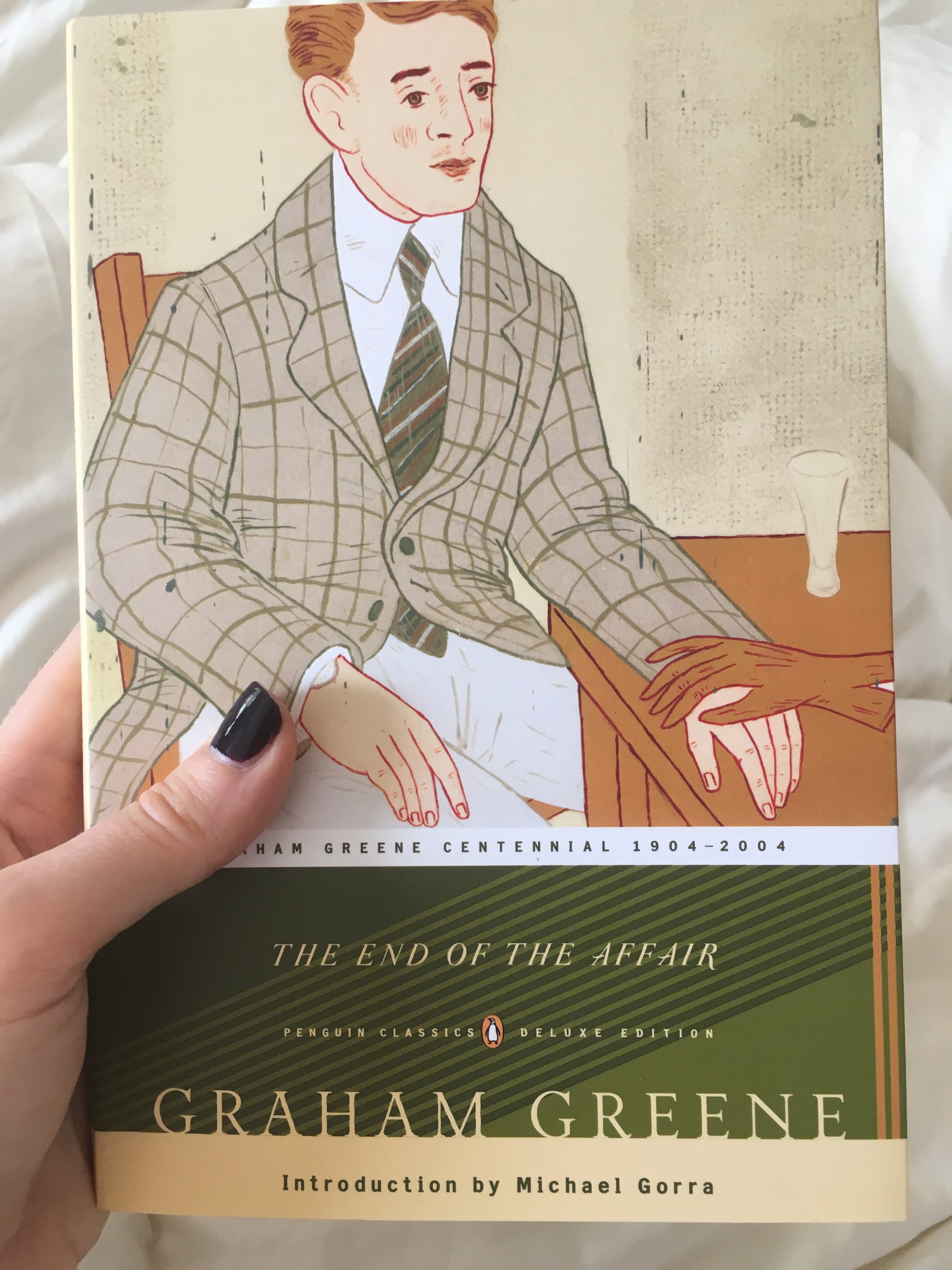
A perfect example is the 1951 novel The End of the Affair by Graham Greene, which was recommended to me when I was sick several autumns ago and I’ve never forgotten it. A man contracts a bumbling father-and-son detective operation to follow the woman he has been having an affair with, believing the reason for her sudden absence is that she is now cheating on him—in addition to her husband—with some new man. It’s funny and heartbreaking and charming, and there’s something satisfying about the narrative arc and resolution that reminds me of an old radio play. It’s also liberating to remember how often classic books play with form in quite bold ways. Here, Greene switches POV to the woman, Sarah’s perspective, half way through, with a section of the tale told entirely as diary entries. I feel like I’d chafe at that switch in a contemporary novel—maybe I’d see it as a trick or a cop-out—but here it seems just right. Good to remember that artifice is a big part of what makes reading fiction fun.
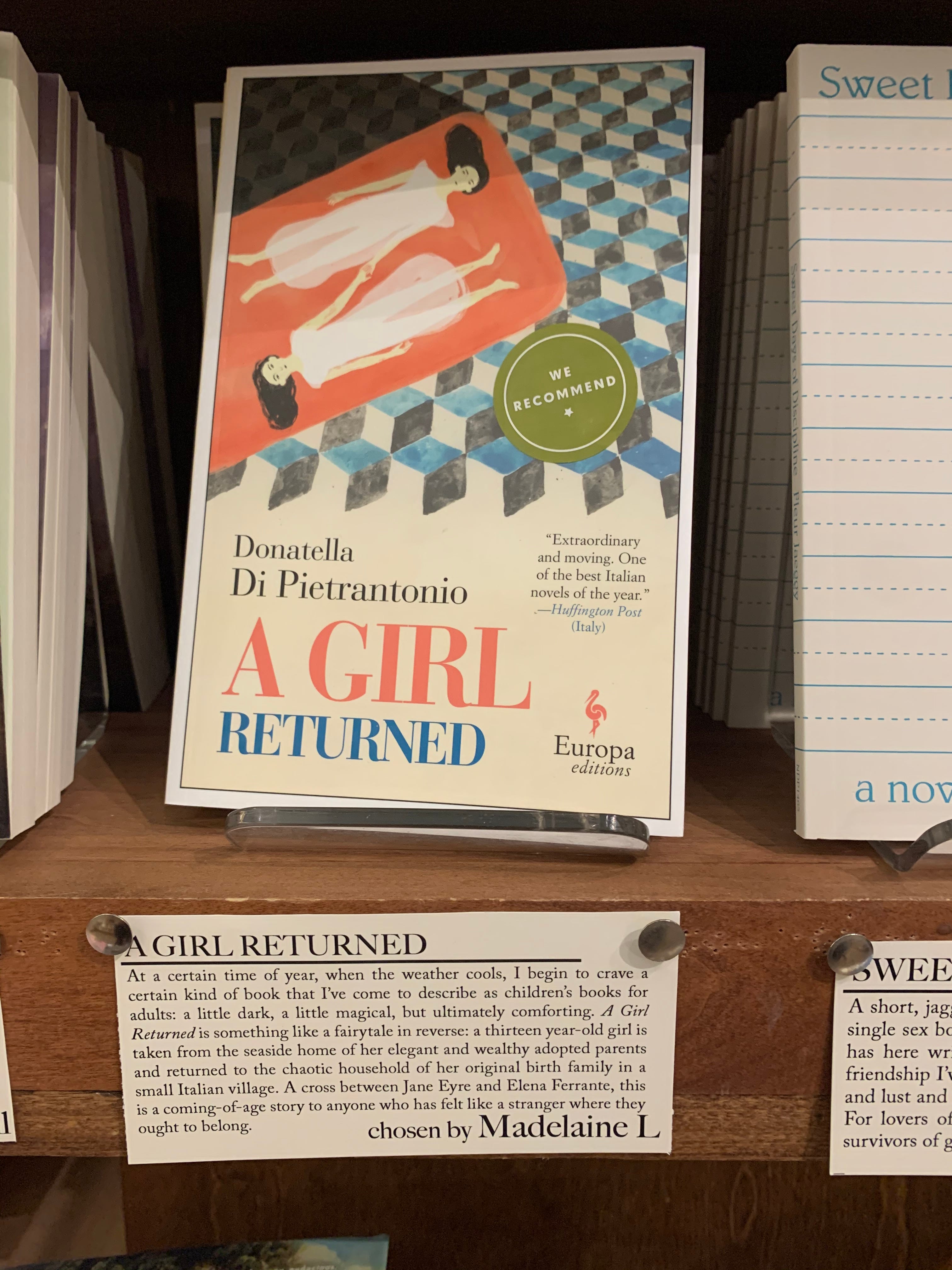
One of the great discoveries of my time as a bookseller in New York was A Girl Returned (L’Arminuta) by Italian author Donatella Di Pietrantonio and translated by Ann Goldstein. A Girl Returned is like a fairytale in reverse: a thirteen year-old girl is taken from the seaside home of her elegant and wealthy adopted parents and returned to the chaotic household of her original birth family in a small Italian village. I hand-sold many copies by pitching it to customers as a cross between Jane Eyre and Elena Ferrante and a coming-of-age story for anyone who has felt like a stranger in the place they ought to belong. In addition to A Girl Returned, Di Pietrantonio has written several novels, a collection of children’s fables, and worked as a pediatric dentist.
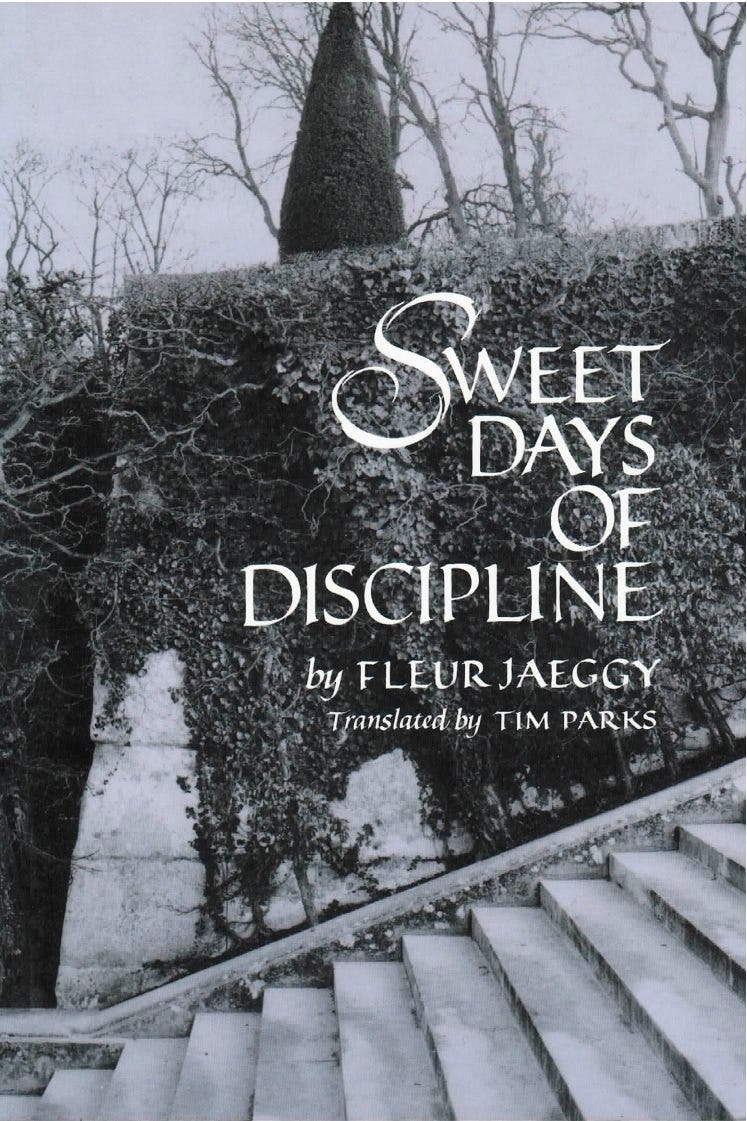
In truth, Fleur Jaeggy’s Sweet Days of Discipline feels more like a winter book to me—inseparable in my mind from the birthday weekend I spent reading it at the bar over cider at Spotty Dog Books in Hudson while snow fell lightly outside, not to mention the cold gothic images of stone and bare branches on the cover of the earlier New Directions edition. (The reprint is chic-er, more Bookstagram friendly, but what can I say? I’m loyal to the edition I read, which looks like a Mazzy Star album cover from the 90s.) However, I am making an exception and including it here because it suits this genre so well in my mind, being, after all, a boarding school story about one girl’s obsession with another in post-war Switzerland. Jaeggy was born in Zurich in 1940, spoke several languages, and wrote Sweet Days of Discipline in Italian. (The English edition was translated by Tim Parks.) Enigmatic, haunting, and elusive, it’s the atmosphere of the novel that has stayed with me most strongly, rather than the plot particulars. As Joseph Brodsky supposedly said of the novel: “Reading time … four hours. Remembering time … the rest of one’s life.”
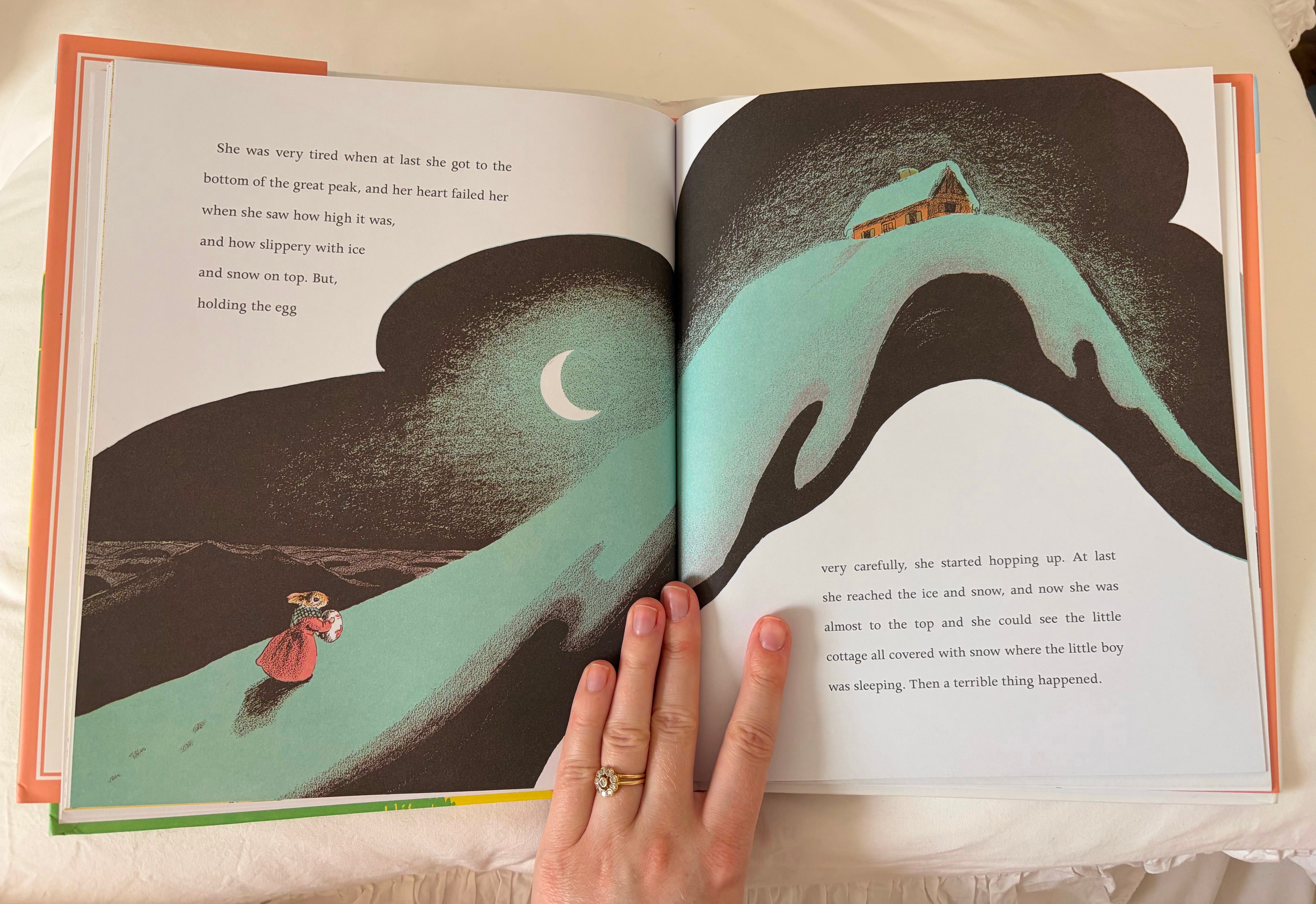
As for actual children’s books, you can still track down a copy of The Country Bunny and The Little Gold Shoes by DeBose Hayward for the small child in your life in time for Easter. I bought mine online last year from the exquisitely curated Acorn Toyshop in Massachusetts (Waldorf & Montessori mums, this one’s for you). Since I couldn’t browse, I picked it for the cover, thinking my bunny-obsessed daughter would like the sweet illustrations. I was thrilled to discover this classic 1939 Easter tale about a brown bunny from the country who dreams of becoming one of the next five Easter bunnies is really a tale about an ambitious single mother trying to break into a male-dominated field. Despite being mocked by the high-class white rabbits and strong jack rabbits for her provincial background and large family, she proves herself fit for the role by demonstrating she is kind, wise and quick-footed, and teaches her twenty-one children to contribute to the household so she can do her important work. One of my favourite aspects of this book is the way it treats domestic work and creative work as equal forms of labor, inseparable from a functioning, happy home—her bunnies are each assigned special tasks, from cooking and gardening, to making the beds and washing the dishes, to singing and dancing for the others to keep their spirits high. It’s never been out of print since its 1939 publication, and has been interpreted as a feminist and anti-racist text — proof, again, that you can raise a small empathetic human through real storytelling, without resorting to F is for Feminist or the Anti-Racist Baby. Also, the illustrations by Margaret Flack are sublime.
Other recommended plain pleasures for the coming long weekend: buy tulips from a bodega if you’re in New York, and if you’re in Australia, eat a hot cross bun.
What other books fit this made-up genre for you, and bring back the feeling reading gave you as child? Let me know in the comments!
In Sweden (and most of Scandinavia), children grow up reading Tove Jansson's Moomin series. It fits perfectly into this style of 'children's literature for adults', with quite a bit of underlying melancholy. Moominpappa at sea is a particularly beautiful one :)
I think you would love The Art of Joy (l'arte di gioia) by Golliarda Sapienza. It is heaven and about a 1920s peasant girl in Sicily becoming a lesbian nun. xx it is a must